The problem with dating your teacher, boss, benefactor, or savior
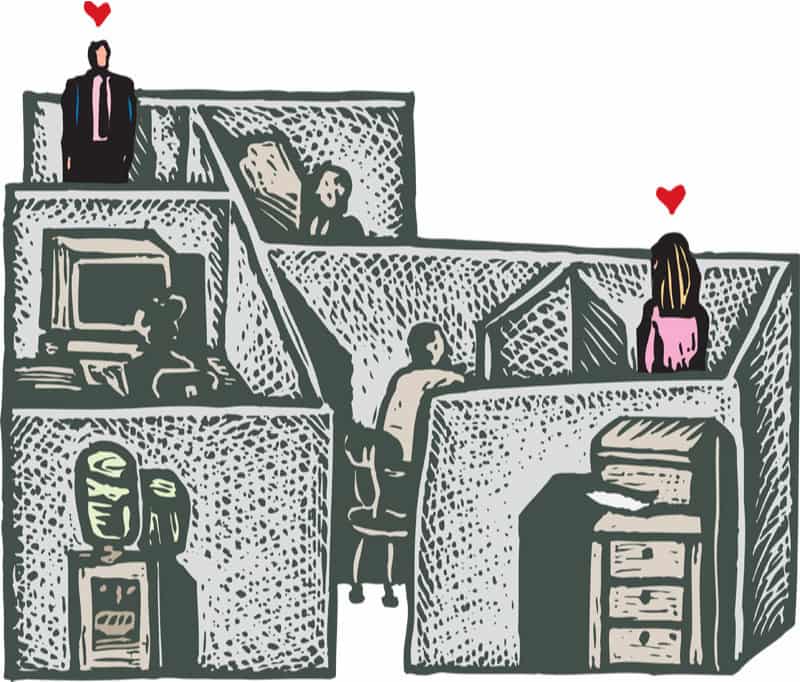
PHOTO: Image from thehrdigest.com
I love love. And if you read this blog frequently, then you probably do too. Otherwise, I don't know why you're here because somehow, no matter what topic I start with, I always find my way back to relationships.
Now before anybody quotes this article and says, "But Jade said..." let me begin by saying, I do not hold any moral superiority to tell you what love is and what it is not. But here I am, once again, putting my thoughts on paper and allowing everyone to judge them, as usual.
So, on my mind today is: love doesn’t remain entirely pure when power tilts too heavily to one side!
Actually, let me say it differently; I don't think there should be such a thing as power in a relationship. Respect? Absolutely. Admiration? Sure. Learning from each other? Of course. But power? No.
Relationships require vulnerability. A lot of it. The person who knows you most intimately already possesses the unique ability to break you in ways nobody else can. They know your fears. They know your insecurities. They know the things you tell the rest of the world and the things you don't.
Personally, I believe two people should meet as equals. Not equal salaries, equal degrees, or equal achievements. Just people who find each other worthy partners and mental companions.
Of course, you won't know everything. One person may be better with money. The other may be better with communication. One may be more emotionally intelligent while the other remembers to pay the electricity bill. That's partnership.
Now, my eyebrows start rising the moment one person has authority over the other.
A teacher and a student.
A boss and an employee.
A mentor and a mentee.
A sponsor and a beneficiary.
Because once power enters the room, love is no longer the only thing we are looking at. Now we have to examine influence, dependency, gratitude, obligations. And no, I don't think that's making a big deal out of nothing. I think those are exactly the questions we should be asking.
We all know stories of students dating teachers. Actually, side note, it seems women are generally more encouraged to "date up." Society practically recommends it. They say, find someone older, more established, more successful. As if romantic success is a promotion.
Meanwhile, men rarely receive the same encouragement. Partly because of ego. Partly because society is incredibly unforgiving to men. And partly because people still struggle with the idea of a woman having significantly more status, money, or authority. But that's another conversation.
Back to the teachers. One thing I always noticed in those relationships was that eventually the teacher stopped feeling like a teacher. The authority slowly disappeared. The student who once stood up when he entered the room would now speak to him as though they were age mates. The relationship (read sex) had quietly rewritten the rules. And how could it not?
You cannot know someone intimately and then continue behaving as if you have never seen that side of them. You simply cannot. Sex is probably one of the most vulnerable things two people can do, but that's not today's topic before my aunties start forwarding this article to each other.
The problem isn't love. The problem is power. Or rather, what power does to love. What I find particularly fascinating, though, is how society reacts depending on who holds the higher position.
Have you noticed? When a male boss dates a female employee, everyone immediately starts asking questions. Did she seduce him? Will rejecting him affect her career? Is she receiving special treatment? Is she being pressured? All valid questions.
But interestingly, the man rarely loses his professional credibility. People may gossip and may judge. But nobody suddenly assumes he is incapable of doing his job. The woman, however, often gets reduced to a theory. She must be sleeping her way to success. She must have found a shortcut.
Now reverse the situation. The woman is the boss, and the man is the employee. Suddenly society changes the conversation. People start asking why she is dating beneath her. They question her standards. They question her judgment. And her other male employees may even lose respect for her.
And the man? The poor man becomes "inganzwa." Because apparently, that’s not acceptable in accordance with the vacuum rules of masculinity. But because society still struggles with the idea that a man can be loved by a woman who outranks him without somehow becoming less of a man.
It's fascinating really. Different reactions, yet the same obsession. Power. Who has it? Who controls it? Who benefits from it? Who might lose it. And who becomes vulnerable because of it. Which is why I have always struggled with the idea that a relationship should be built around hierarchy.
Maybe this is controversial, but your partner should not be your father. Your partner should not be your king. Your partner should not be your supreme leader. Your partner should not be someone whose opinions automatically become law.
Please. Go fix your daddy/mummy issues first. Then come back! Because, no, marriage is not supposed to be an adoption programme. I know we romanticize relationships where one person leads and the other follows. Sounds cute on paper.
But personally? I want someone whose mind I respect. Someone who respects mine. Someone who can challenge me. Someone I can challenge. Someone who can sit across from me at dinner and make me reconsider my position on something. Not someone before whom I must constantly kneel.
I once read a passage from Margaret Kent's book Love at Work: Using Your Job to Find a Mate.
Yes, the title alone already deserves its own article. Anyway, she writes:
"If the man you're attracted to is your boss, the greatest obstacle you may face is his idea that since he's superior to you at work he's also superior in a personal relationship. Solve that problem by building yourself up and, where necessary, knocking him down by pointing out past errors he has made."
Do you see what she is suggesting? Essentially, she is saying that if he holds authority, you should keep a few of his vulnerabilities in your back pocket. Just in case. To balance things out. To even the scales.
Personally, that is not the kind of balance I want in a relationship. I don't want us keeping score. I don't want us collecting each other's weaknesses for future use.
And that brings me to one of the most uncomfortable conversations we should have as a society: Kwirerera.
I always argue with people about whether it is mentorship, kindness, investment, or GROOMING. I'll leave the labels to people smarter than me. But I do think there are questions worth asking.
Can genuine consent exist when one person's future depends heavily on another?
Can affection be separated from obligation?
Can gratitude be separated from love?
I once sat through a story time, and you know I love me some tea. This girl told me about her man; who had paid her school fees, supported her siblings, and helped her after she lost her parents. He protected and encouraged her through it all.
Honestly, by the end of the story I wanted to thank him myself. The man sounded like an angel. Then she told me that shortly before graduation, he asked her to marry him. I asked whether she had said yes…
Now pay attention. She didn't say: "Ofcourseeee Jade, I love him so much!" She didn't say: "There is nobody else I would rather marry!" She didn't say: "I cannot imagine my life without him!"
Instead she said: "Obviously. I couldn't break his heart after everything he has done for me." And there it was! The sentence that refused to leave me alone. She felt indebted to him.
But did that automatically mean she found him dashing? Did it mean she wanted to spend every day of her life beside him? Did it mean she wanted to build a beautiful family with him? Did it mean she looked at him and thought, "I hope my children look like this man?"
Again, I am no one to define love for other people. But those questions immediately came to my mind. Because language is revealing.
"He helped me when nobody else did."
"He sacrificed for me."
"I couldn't leave him after everything he has done."
Notice what is missing?
Not once did she say: "I love him."
Not once did she say: "I chose him."
Not once did she say: "I would choose him over and over again."
Even when we got to the topic of children, she said she wanted them because it would make him happy. Again. Do you see what I mean?
Of course, I asked for her permission before sharing this story. And luckily for me, I don't know the man, so hopefully he never reads this article. But if he does, then maybe he should sit with it for a little bit.
Also, my friend loves gifts. She loves thoughtful dates. Meanwhile this man mostly asks her to visit him, and their outings largely consist of church and then back to his house.
Now before anyone attacks me, I am not saying he does the bare minimum. Clearly he didn't. The man practically carried her through some of the hardest years of her life. But compatibility and gratitude are not the same thing.
And when I suggested communicating her unmet expectations, she immediately worried about sounding ungrateful. Ungrateful!!
Imagine being afraid to express your needs because someone has done too much for you. That is the part that breaks my heart. You can be grateful to someone forever and still not be meant to marry them. You can appreciate someone's sacrifices and still not belong together. You can thank someone without giving them your future.
Love is not a scholarship repayment plan. Love is not an invoice. Love is not an accumulated interest.
And that is the question of this entire article: Remove the school fees, the job title, the authority, the mentorship, the sacrifices. Remove everything that is owed.
If nobody owed anybody anything, would they still choose each other?
That answer tells you almost everything.